
Insulating film for old glass
Low-E Window Film in San Diego
Low-E window film puts a low-emissivity layer onto glass you already have, so the pane bounces radiant heat back toward where it came from. In San Diego it is mainly a retrofit for older commercial buildings with single-pane windows that run hot by day and cold near the glass at night.
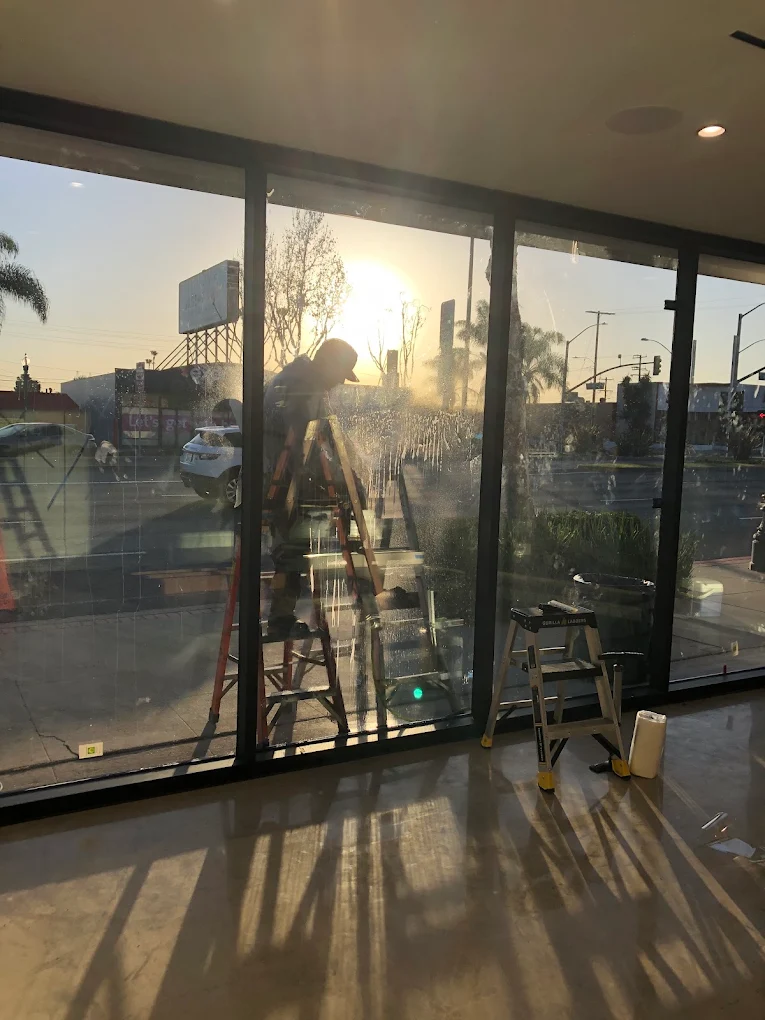 San Diego
What Low-E Window Film Does Differently
Standard solar films work on incoming sunlight. Low-E films do that too, but they also carry a coating that reflects long-wave infrared, the heat radiated by warm objects. In summer, that helps keep heat radiated by sun-warmed surfaces outside. On cool nights, it reflects the room's own warmth back inside instead of letting it radiate out through the cold glass.
The key number is emissivity. Plain glass has a high emissivity, meaning it readily absorbs and radiates heat. A low-E film lowers that value, which improves the window's U-factor, a measure of how easily heat passes through. The result is a single-pane window that behaves somewhat more like an insulated unit.
Why Low-E Window Film Makes Sense in San Diego's Climate
San Diego does not have harsh winters, so it is fair to ask whether insulating film is worth it here. For most homes with modern dual-pane windows, it usually is not the first choice. For older commercial buildings with large areas of single-pane glass, the case is stronger. Those buildings take solar heat through the glass all afternoon and then lose warmth through the same glass in the evening, especially inland where nights cool off quickly.
Coastal buildings see a different pattern: mild days, damp cool nights and long grey mornings in late spring. People sitting next to old glass on those mornings feel the chill. Low-E film reduces that cold-glass effect, so perimeter seats are more comfortable without turning up the heat for the whole floor.
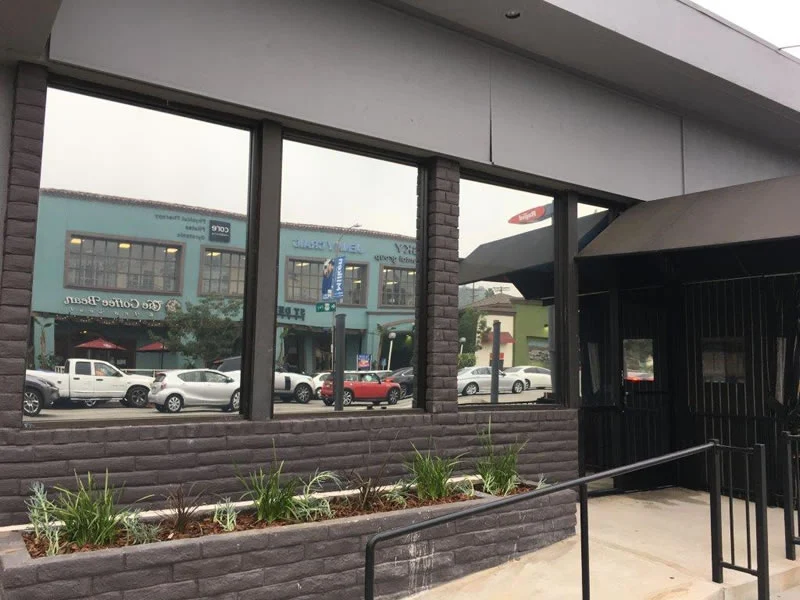
Low-E Window Film for Historic and Older San Diego Buildings
Some of the strongest candidates are older buildings where window replacement is difficult or not allowed. Historic commercial buildings in the Gaslamp Quarter, older offices and medical buildings in Hillcrest, and mid-century low-rise buildings across the city often have original single-pane glass in metal or wood frames. Replacing those windows can be costly, disruptive and, in historic properties, subject to review.
Low-E film goes on the interior surface of the existing glass and leaves frames and exterior appearance largely unchanged. Many low-E products are fairly neutral in color, which helps in buildings where the facade has to keep its original look. We still recommend confirming with the landlord or any review body before installing on a designated historic building.
When Low-E Window Film Is Not the Right Fit
Glass that already carries a factory low-E coat, usually on newer dual-pane units, gains little from a second low-E layer, and a standard solar control film may be the better choice where heat is a problem. We check for existing coatings before recommending anything.
Low-E films also have surface coatings that need gentle care. Cleaning crews should use soft cloths or squeegees and non-abrasive cleaners, and avoid scraping. We provide written cleaning guidance for janitorial staff at the end of each commercial job.
- Best fit: older single-pane commercial glass
- Good fit: buildings where window replacement is restricted
- Weak fit: glass that already has a factory low-E coating
- Requires: gentle, non-abrasive cleaning
Low-E Window Film Benefits for San Diego Buildings
Year-Round Comfort Near Single-Pane Glass
Low-E film cuts solar heat in the afternoon and reduces the cold-glass chill in the evening and early morning, so seats beside old windows are usable through the whole day.
Low-E Film Instead of Window Replacement
Upgrading the thermal performance of existing glass avoids the cost, permits and disruption of replacing windows. It is especially useful where frames are sound or historic.
Lower HVAC Energy Use in Both Directions
By reducing heat gain in the afternoon and heat loss at night, low-E film trims both cooling and heating demand in buildings with a lot of single-pane glass.
UV Blocking From Low-E Window Film
Low-E films also block nearly all UV, slowing fading of carpet, furniture and finishes in the same rooms where they improve comfort.
Low-E Window Film in San Diego: Common Questions
Can low-E film justify its cost in San Diego's mild weather?
On older single-pane glass, often yes, because it improves comfort in both directions and cuts afternoon solar gain. On modern low-E dual-pane windows, the added benefit is usually small.
How does low-E film compare to new dual-pane windows?
New insulated windows generally perform better, but they cost far more and involve construction. Low-E film narrows part of the gap at a fraction of the cost and disruption.
Can low-E film go on historic windows?
In most cases, yes. It bonds to the interior face of the glass and nothing about the frame changes. If the building is designated, run it past your landlord or the historic review body before scheduling.
How should low-E film be cleaned?
Soft microfiber cloths or a rubber squeegee with a mild, non-abrasive cleaner. Blades, scouring pads and gritty powders scratch the coating, so keep them off the glass. Janitorial staff get a written care sheet after installation.
Window film quote
Request a Low-E Window Film Quote in San Diego
Describe the building, its age and whether the glass is single-pane, then attach photos of typical windows. We will confirm whether low-E film or a solar film fits better.
Prefer email? info@windowfilmsandiego.pro